


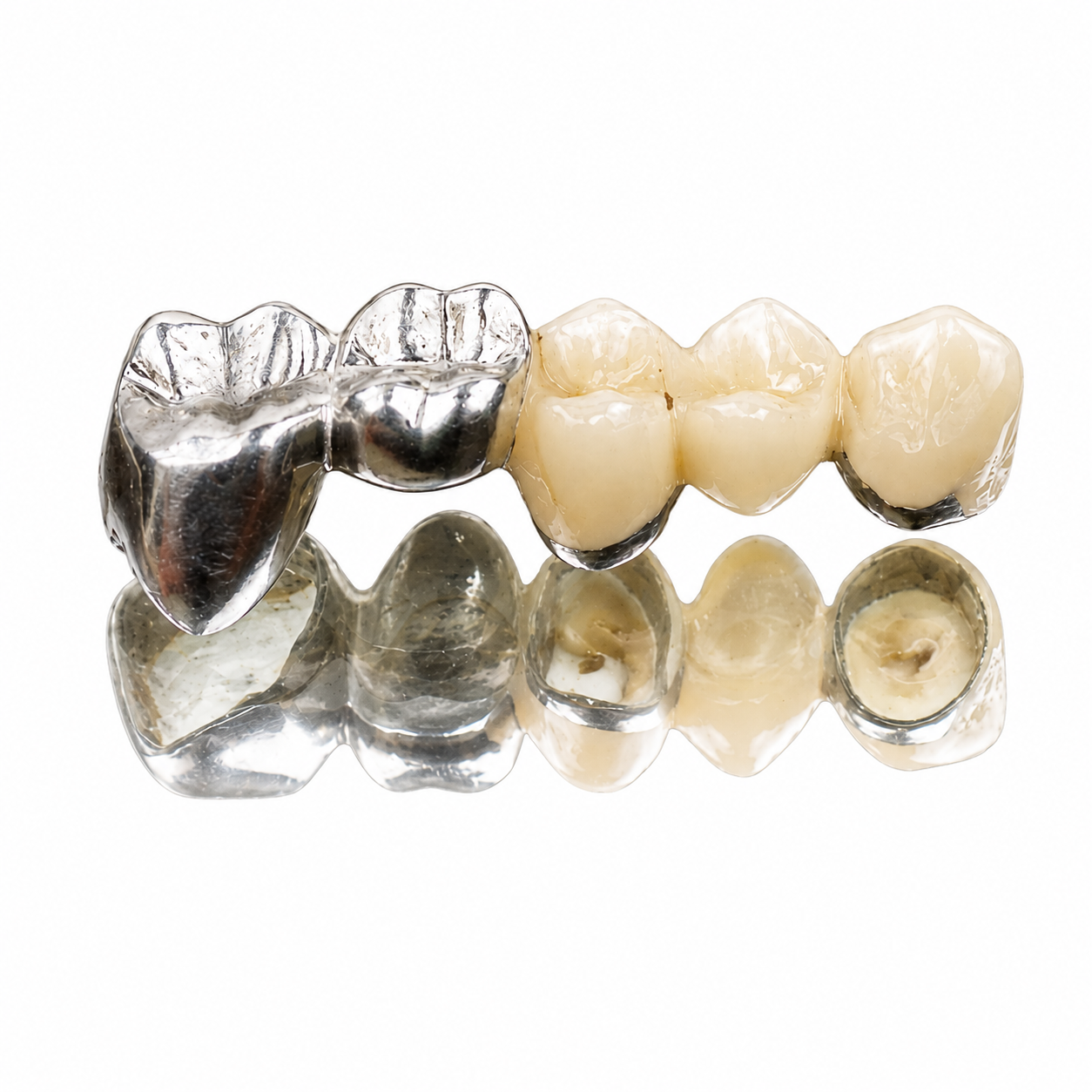
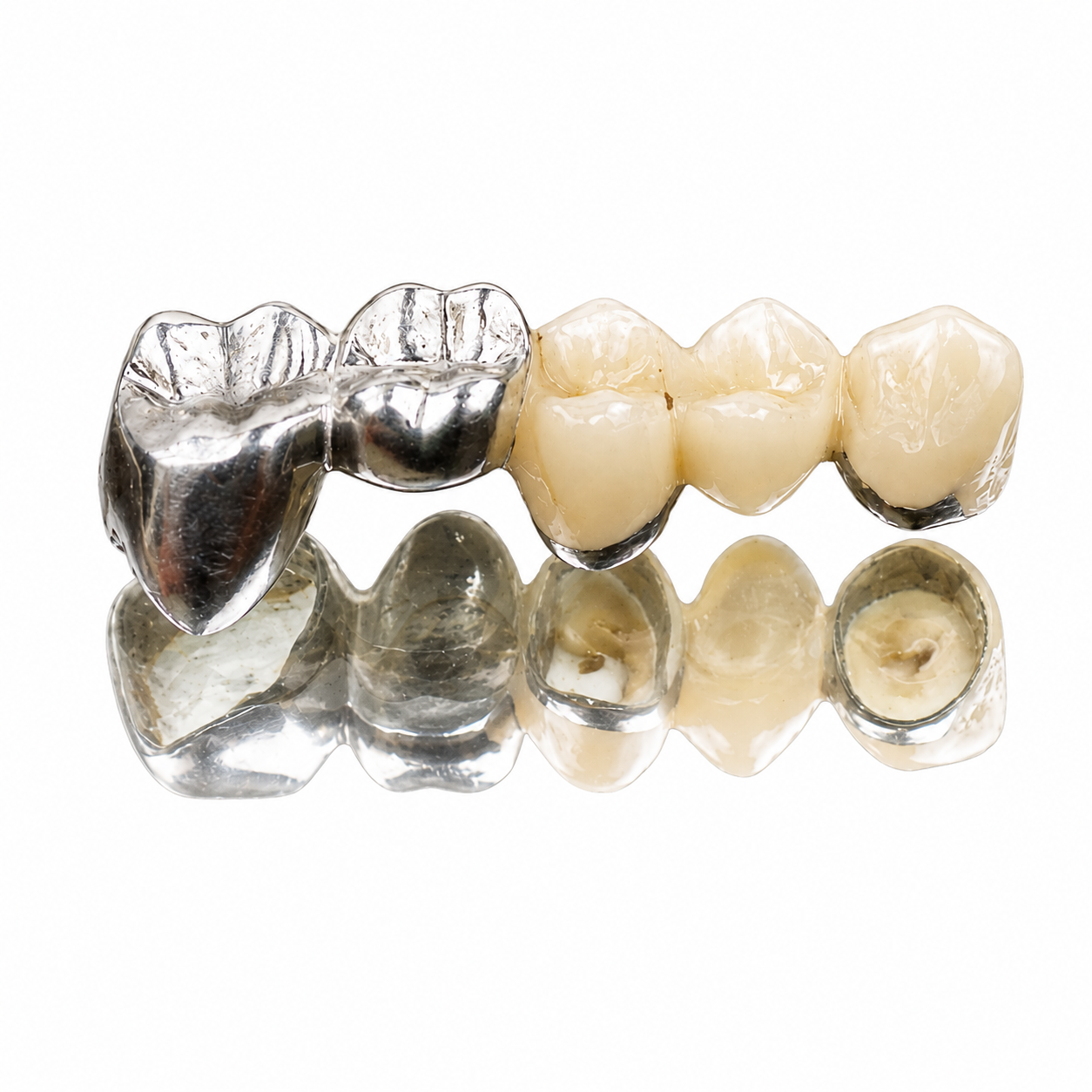
What Is a Full Metal Crown?
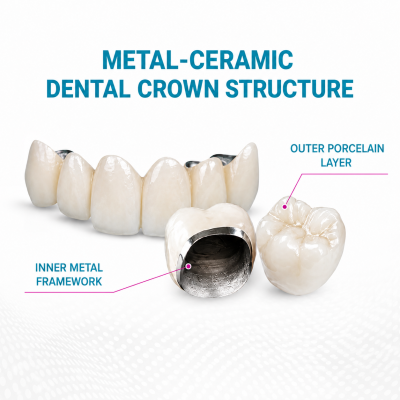
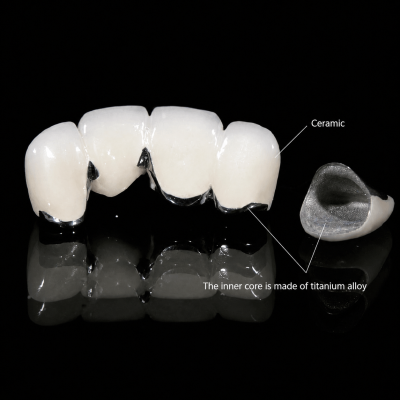
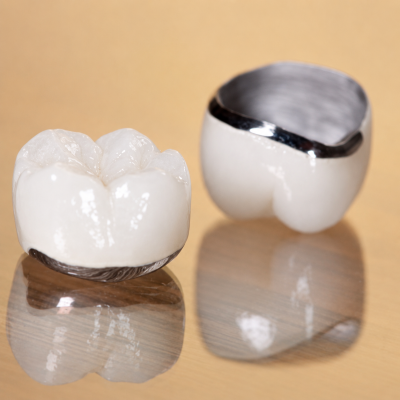
A full metal crown, also known as a full-cast metal crown, is a dental restoration in which the entire crown is fabricated from a metal alloy. Unlike a porcelain-fused-to-metal crown, this restoration does not have an outer porcelain layer for aesthetic purposes. Instead, the entire structure, from the framework to the occlusal surface, is made completely of metal.
Full metal crowns are commonly used in cases that require high durability, strong load-bearing capacity, and minimal aesthetic demands. They are particularly suitable for posterior teeth, where stable chewing function is essential and the restoration is less visible during speaking or smiling.
Detailed Information About Full Metal Crowns
Solid Metal Construction
Full metal crowns are fabricated from high-strength metal alloys. Thanks to their solid construction, these restorations provide excellent load-bearing capacity, are less likely to chip, and can remain stable during daily chewing.
Durability and Load-Bearing Capacity
Because they are made entirely of metal, full metal crowns offer high durability and excellent resistance to chewing forces. This is an important advantage for molars, heavily loaded teeth, or cases requiring a strong and long-lasting restoration.
Stability During Chewing
Full metal crowns have a strong and durable surface that effectively supports chewing function. When properly designed according to the patient’s occlusion and correctly cemented, the restoration can provide stable chewing performance while reducing the risk of fracture compared with certain restorations that have an outer veneering layer.
Shade and Aesthetics
Because the entire crown is made of metal, its shade does not resemble that of natural teeth. Full metal crowns have a metallic appearance and may be noticeable when placed in the anterior region or when the patient speaks or smiles. For this reason, they are generally preferred for posterior teeth rather than front teeth.
Safety and Biocompatibility
Full metal crowns can be used reliably in many restorative cases when an appropriate alloy is selected and the restoration is fabricated and placed correctly. However, because they contain metal, patients with metal sensitivity or a history of metal allergies should undergo careful examination and consultation before treatment.
Key Advantages of Full Metal Crowns
High Durability
· Strong solid-metal construction.
· Low risk of chipping during use.
· Suitable for teeth exposed to heavy chewing forces.
· Can remain stable for many years with proper care.
Excellent Resistance to Chewing Forces
Full metal crowns can withstand strong chewing forces, making them suitable for molars and other areas regularly exposed to pressure during mastication. Due to the strength of the metal, these restorations can reliably meet everyday chewing demands.
Low Risk of Chipping During Use
Because there is no outer porcelain layer, full metal crowns eliminate the risk of porcelain chipping or veneer separation during chewing. This makes them suitable for cases in which durability and strength are prioritized over aesthetics.
Suitable for Posterior Teeth
Full metal crowns are commonly indicated for posterior teeth, where the restoration is less visible but strong chewing performance is required. They are suitable for patients who need a durable, stable, and reliable restoration.
Cost-Effective
Compared with many premium all-ceramic restorations, full metal crowns are generally more affordable. They are a suitable option for patients seeking a strong restoration that supports chewing function while remaining within budget.
Disadvantages of Full Metal Crowns
Despite their durability and chewing performance, full metal crowns have several limitations:
· The metallic shade does not resemble natural teeth and therefore provides limited aesthetics.
· They are not suitable for anterior teeth or other highly visible areas.
· A metallic appearance may become noticeable near the cervical margin over time.
· They do not offer the translucency, brightness, or natural shade of all-ceramic restorations.
· Patients with metal sensitivity should receive careful consultation before treatment.
· Inadequate oral hygiene may allow plaque to accumulate around the crown margin, potentially causing gum discomfort.
Suitable Candidates for Full Metal Crowns
Full metal crowns may be recommended in the following cases:
· Molars with extensive decay or significant structural damage that require a strong restoration.
· Root canal-treated teeth that need full coverage to protect the remaining natural tooth structure.
· Teeth exposed to heavy chewing forces.
· Cases with limited aesthetic requirements.
· Patients seeking a cost-effective restorative option.
· Posterior teeth that are less visible during speaking or smiling.
· Cases considered suitable by the dentist following a clinical examination.
Full Metal Crown Treatment Process
Step 1: Examination and Consultation
The dentist examines the patient’s oral condition, evaluates the tooth requiring restoration and the occlusion, and takes radiographs when necessary. Based on this assessment, the dentist recommends an appropriate full metal crown treatment plan according to the tooth position, chewing requirements, and the patient’s budget.
Step 2: Tooth Preparation
The dentist removes an appropriate amount of tooth structure to create sufficient space for the metal crown. This procedure must be performed accurately to ensure that the final crown fits closely and does not feel bulky or interfere with chewing.
Step 3: Dental Impression Taking
After tooth preparation, an impression is taken using specialized impression materials or digital scanning technology. The data is then sent to the dental laboratory, where the full metal crown is designed and fabricated according to the patient’s tooth shape, dimensions, and occlusion.
Step 4: Temporary Crown Placement
While the final crown is being fabricated, a temporary crown may be placed to protect the prepared tooth and provide basic chewing function. The temporary restoration also helps the patient maintain normal daily activities during the waiting period.
Step 5: Full Metal Crown Placement
Once the full metal crown is completed, the dentist checks its marginal fit, shape, contact points, and occlusion. After confirming that the patient feels comfortable, the crown is permanently cemented using a specialized dental luting material.
Lifespan of Full Metal Crowns
Full metal crowns can have a relatively long lifespan when properly fabricated, placed, and maintained. Their solid metal construction allows them to provide stable chewing function for many years, particularly in the posterior region.
Factors that may affect the durability of a full metal crown include:
· The dentist’s clinical skill.
· The accuracy of the restoration design and fabrication process.
· The condition of the prepared natural tooth.
· The patient’s occlusion.
· The type of alloy used.
· Oral hygiene after treatment.
· Chewing habits and regular follow-up examinations.
How to Care for Full Metal Crowns
To maintain the durability of the restoration and reduce the risk of complications, patients should:
· Brush at least twice a day using a soft-bristled toothbrush.
· Use dental floss or a water flosser to clean between the teeth.
· Carefully clean the gum margin around the metal crown.
· Avoid biting directly on extremely hard objects.
· Avoid using the teeth to open bottle caps, bite fingernails, or tear packaging.
· Avoid excessive chewing pressure on the newly restored tooth during the initial period.
· Attend dental check-ups every six months to assess the crown, gum margin, and overall oral health.
Why Choose a Full Metal Crown?
A full metal crown is a suitable option for patients who require a restoration with high durability, strong load-bearing capacity, and a reasonable cost. Its solid metal construction helps reduce the risk of chipping, supports stable chewing function, and makes it particularly suitable for posterior teeth.
Although it does not provide the natural aesthetics of an all-ceramic crown or a porcelain-fused-to-metal crown, a full metal crown remains an effective restorative solution when strength, durability, and chewing function are prioritized over appearance.
Frequently Asked Questions About Full Metal Crowns
Are full metal crowns aesthetic?
Full metal crowns have a metallic appearance, so they are less aesthetic than porcelain or all-ceramic crowns. For this reason, they are usually placed on posterior teeth, where they are less visible during speaking or smiling.
Is the full metal crown procedure painful?
The full metal crown procedure is generally performed under local anesthesia, so patients usually experience little to no pain during treatment. Mild sensitivity may occur for a short period afterward and typically decreases gradually.
How long can a full metal crown last?
A full metal crown can remain functional for many years when it is properly fabricated, correctly placed, carefully maintained, and regularly examined. Its actual lifespan depends on the alloy used, the condition of the natural tooth, and the patient’s chewing habits.
Are full metal crowns safe?
Full metal crowns can be used reliably in many restorative cases. However, because they contain metal, patients with metal sensitivity or a history of metal allergies should discuss these concerns with their dentist before selecting this type of restoration.
Reviews
There are no reviews yet.