


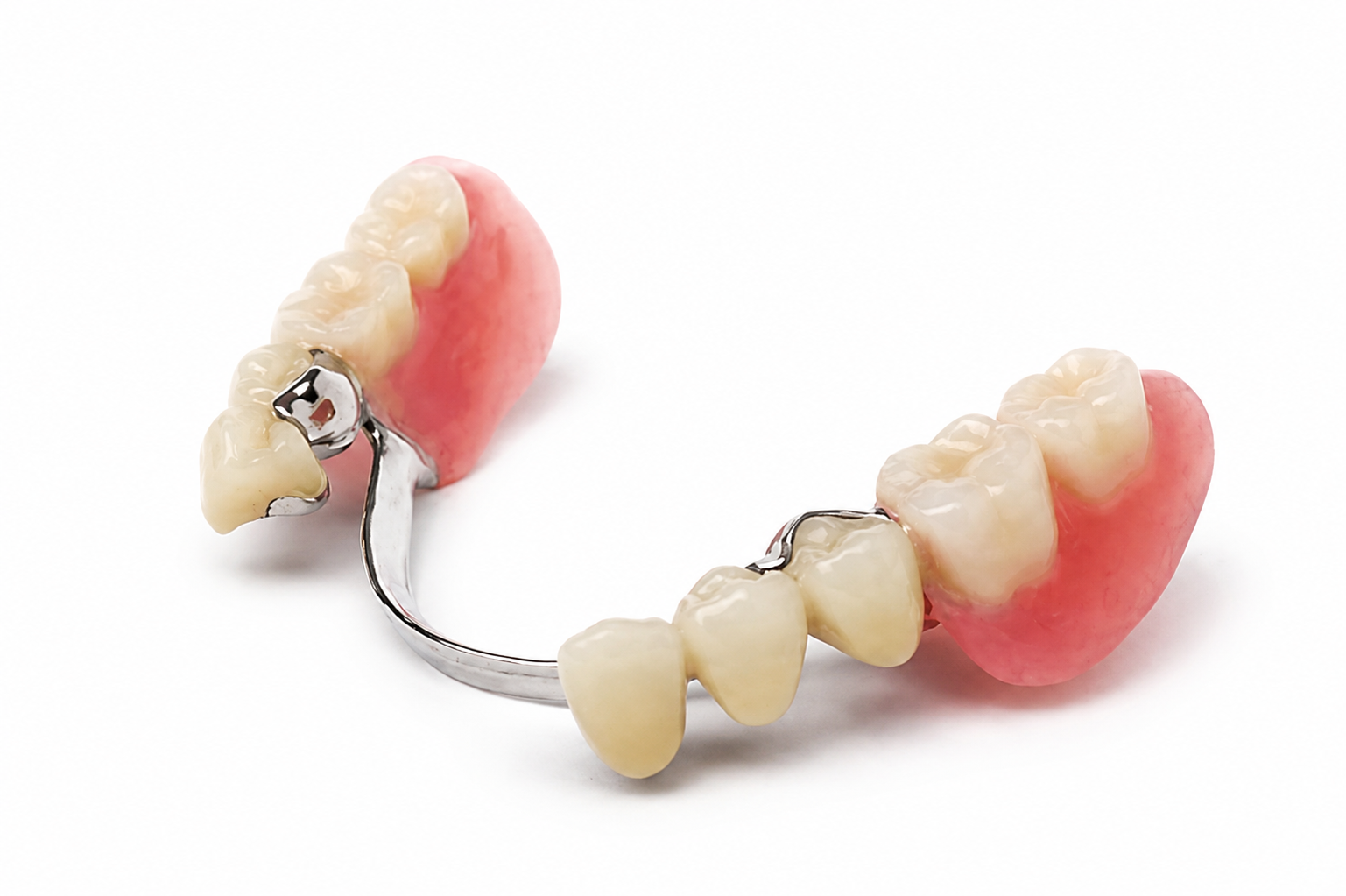
Structure of a Titanium Framework Denture
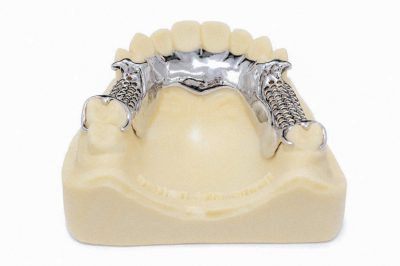
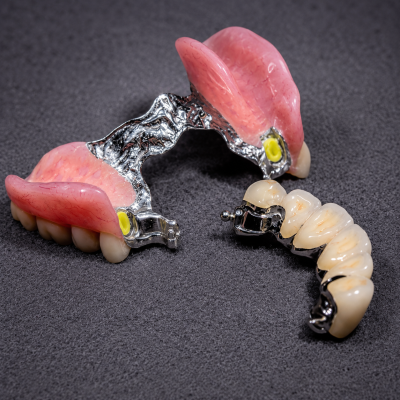
· Framework: Cast from titanium alloy, providing a lightweight and durable structure that can be designed compactly to fit closely against the gums.
· Artificial teeth: Made from ceramic or acrylic and securely attached to the framework.
· Clasp/attachment system: Retains the denture on the remaining natural teeth, allowing chewing forces to be distributed through both the natural teeth and the oral mucosal tissues.
Advantages
· High stability: Titanium is strong and helps reduce the risk of fracture or breakage.
· Lightweight and compact: The streamlined design helps reduce bulkiness and discomfort inside the oral cavity.
· High durability: Supports improved chewing function and long-term use.
· Fast procedure with minimal discomfort: The treatment process is generally completed quickly and usually causes little discomfort.
· Good aesthetics: The framework is positioned inside the denture, and the retention components can be concealed to create a more natural appearance during communication.
Disadvantages
· Not suitable for every case: This restoration is only appropriate for certain types of tooth loss and requires a clinical evaluation before treatment.
· Higher cost than conventional metal frameworks: This is mainly due to the use of titanium material.
· High technical requirements: The design and fabrication process requires modern equipment and experienced dental technicians.
· Initial adaptation period: Patients may experience a slightly bulky or unfamiliar sensation during the early stage of wearing the denture.
Reviews
There are no reviews yet.